
Listen read aloud, 6 min — or as a conversation, 7 min
Why Weekly Is the Engine
The daily brief is the surface; the weekly review is where the system’s health gets maintained. Delegations age, projects stall, someday items rot, ventures go quiet — none of it shows up in a daily message capped at 4,000 characters, and none of it should. Once a week, all of it gets one honest pass. Skipped weeklies are the clearest signal the system is breaking; the cadence file calls them “an anchor that doesn’t move.”
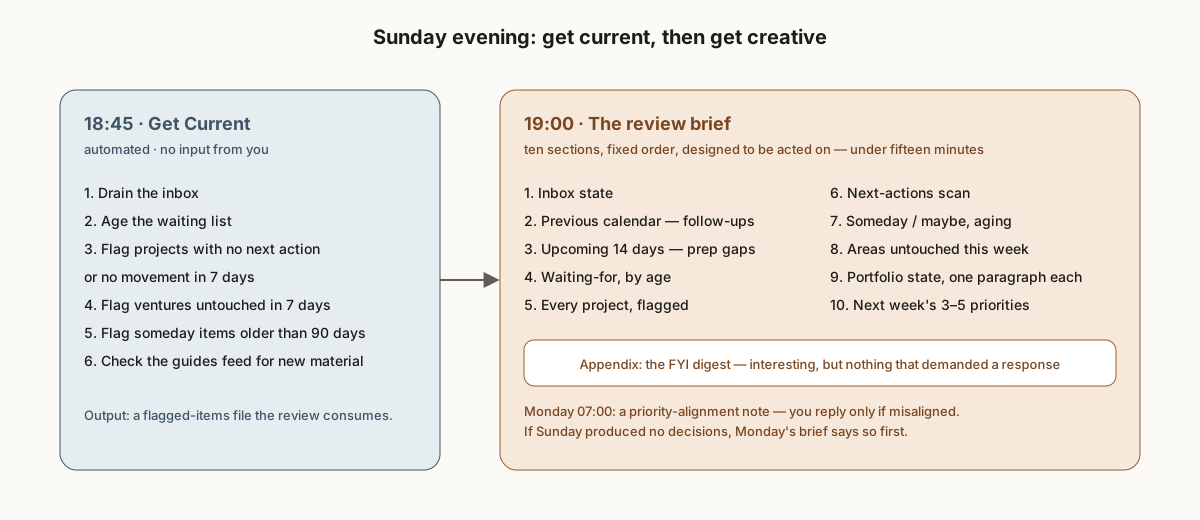
Step One: Get Current (Automated, No Input from You)
Fifteen minutes before the review lands, a headless session runs the housekeeping pass — triage only, no brief, no messages:
- Drain the inbox. Every capture becomes a task, a note, or a question; processed items move to a dated archive folder.
- Age the waiting list. Any
waitingtask whose follow-up date has passed is bumped and noted; anything older than fourteen days without a follow-up date is flagged. - Flag stalled projects. Every active project note with no movement in seven days and no
waitingreason. - Flag stale ventures. Every active venture whose hub note has not been touched in seven days. (Activity keys off file edits, not task churn.)
- Flag aging someday items. Anything older than ninety days gets a delete-prompt.
- Check the guides feed for new material worth surfacing. See Watching for new guides.
The output is a flagged-items file the review consumes. This is the housekeeping layer, kept strictly separate from the briefing layer — see What a chief-of-staff system is on why the three layers are never collapsed.
Step Two: The Review Brief
Ten sections in this exact order, GTD-aligned, designed to be acted on rather than read:
| # | Section | What you do with it |
|---|---|---|
| 1 | Inbox state — processed, dropped, still unprocessed | decide the leftovers |
| 2 | Previous calendar — past seven days’ events needing follow-up | confirm or dismiss each candidate |
| 3 | Upcoming calendar — next fourteen days; prep gaps; conflicts | assign prep tasks |
| 4 | Waiting-for, sorted by age | follow up, escalate, or close |
| 5 | Project list — every project, flagged: no next action / no movement / outcome achieved | unstick, park, or close |
| 6 | Next-actions scan — tasks by venture; orphans, mis-filed, blocked | re-label, re-prioritise |
| 7 | Someday / maybe — items aging out | keep, promote, or delete |
| 8 | Areas of focus — ventures untouched this week; ventures to add or archive | say so |
| 9 | Portfolio state — one paragraph per venture: status, blockers, numbers, next bet | correct the picture |
| 10 | Next week’s priorities — three to five, proposed | confirm or edit |
| — | Appendix: the FYI digest — everything interesting that didn’t demand a response | skim, or don’t |
On Monday at 07:00 a short priority-alignment note restates the three to five priorities; you reply only if misaligned. If Sunday’s review produced no decisions, Monday’s brief opens with: “Weekly review didn’t complete — N items need a decision.”
Where It Happens
The weekly is too long for a phone. The push still goes to the channel — as a short thread rather than a file, because a raw document rendered badly on first attempt — but the dispositioning happens on the laptop, in the review surface, where every task reference is clickable and the stale buckets can be walked one item at a time. See The review surface.
Above the Weekly
Monthly: a portfolio pack (one page per venture: wins, issues, one decision needed, next month’s rock), a read-through of the decision journal, and a read-through of the feedback log looking for lessons to promote. Quarterly: a rock review per venture, a role-charter review (is the chief of staff working on the right things? edit the identity file), an archive sweep, and a tool audit — anything unused for thirty days is removed. Annually: re-read every decision record. Daily plus weekly is the engine; the rest is maintenance.
The Rule That Keeps It Honest
Every section either produces a disposition or is empty. A weekly review that is read and produces nothing has become a newspaper — the same anti-pattern as the daily, at a larger scale. When that starts happening, the fix is usually to shrink the review, not to make it more interesting.
See it
The demo vault has two weekly reviews, including the three weeks one step could not reach its feed. It is fictional, and it was built by Claude Code sessions running the bootstrap prompt — not written by hand.
Hand this to your chief of staff. Plain Markdown: /guides/the-weekly-review.md. Tell it: "Read this guide and tell me what in our system it would change."
Also for your Claude: whole-site index · bootstrap prompt · guide feed